Language Exchange Pen Pals: How to Learn a Language by Writing Letters
A language exchange pen pal gives you a real person to write to, in a language you are still learning
Quick answer: A language exchange pen pal is someone who speaks the language you are learning and wants to learn yours. You write to each other regularly, usually half in each language, and gently correct one another. It works because you have a real reason to write, a real person to write to, and time to think before you reply. Global Penfriends lets you list up to five languages on your profile with your level in each, and search for members by language, so you can find a partner whose native language is the one you want to learn.
Apps can teach you vocabulary. Classes can teach you grammar. But the moment a language actually becomes yours is the moment you use it to say something real to someone who cares about the answer. That is exactly what a language exchange pen pal gives you. Since 1995, Global Penfriends has connected 1 million+ members across 195+ countries, and a large share of them joined for one reason: to practise a language with a real person rather than a textbook.
Find a language exchange penpal for free, or search members by language to see who is waiting to write to you.
What Is a Language Exchange Pen Pal?
A language exchange (sometimes called a tandem partnership) is a simple trade. You speak English and are learning Spanish. Your pen pal speaks Spanish and is learning English. You each write in the language you are learning, and you each read letters written in your own language by a learner. Both people teach, both people learn, and nobody pays for a tutor.
The best pairings are usually mirror images: your native language is their target language and vice versa. That way each of you has an expert on hand for every letter. It also keeps the exchange fair, which matters more than people expect. An exchange where one person does all the correcting tends to fizzle out within a couple of months.
Who language exchange suits
- Learners at an awkward middle stage: you know the grammar but freeze when you have to produce a real sentence
- People who dislike speaking practice: writing gives you time to look things up and get it right
- Anyone preparing for travel, study or work abroad: you learn how people actually write, not just how textbooks do
- Language lovers who want a friend, not a drill: the friendship is the point, and the language improves as a side effect
Why Letters Beat Apps for Learning a Language
Chat apps push you to answer in seconds, so you fall back on the few phrases you already know. A letter does the opposite. You sit with it. You reread the paragraph your pen pal wrote about their grandmother's cooking, notice a verb form you have never seen, look it up, and then use it yourself in your reply. Slow is not a weakness here. Slow is the whole method.
Why the slow pace helps
Every reply is a small piece of homework you actually want to do. You write in complete sentences, you check your work before you send it, and you keep a permanent record of every letter, so you can see your own progress six months later. No app gives you a real person on the other side who notices when your writing gets better.
- Real language, not textbook language: your pen pal writes the way people in their country actually write, slang and all
- Culture comes free: festivals, food, school life, family customs and local humour arrive in every letter
- Motivation that lasts: a reply waiting in your inbox is a far better reason to study than a streak counter
- Both formats work: write online for quick exchanges, or by post if you want handwriting practice and something to keep (see our postal vs email guide)
How to Find a Language Exchange Partner
On Global Penfriends, languages are part of your profile rather than an afterthought. When you create your profile you can list up to five languages and mark your level in each one, from beginner to fluent. Other members can then search by language, so a Japanese member learning English can find you, and you can find them.
Set your profile up for a good match
- List every language honestly: put your native language first, then the ones you are learning with a realistic level. Overstating your level leads to letters you cannot read.
- Say what you want in your description: a single line such as "Learning Italian, happy to help with English in return" does more than any amount of searching. Our guide to writing your first letter covers introductions too.
- Search for the mirror image: use the language filter to find members whose native language is your target language, then read their profiles to see whether they mention learning yours.
- Shared interests matter as much as language: you will write more, and more naturally, to someone who also loves hiking, cooking or football. Language exchange works best when there is something to talk about.
Create your free profile and list the languages you speak and the ones you are learning.
The Half-and-Half Letter: A Structure That Works
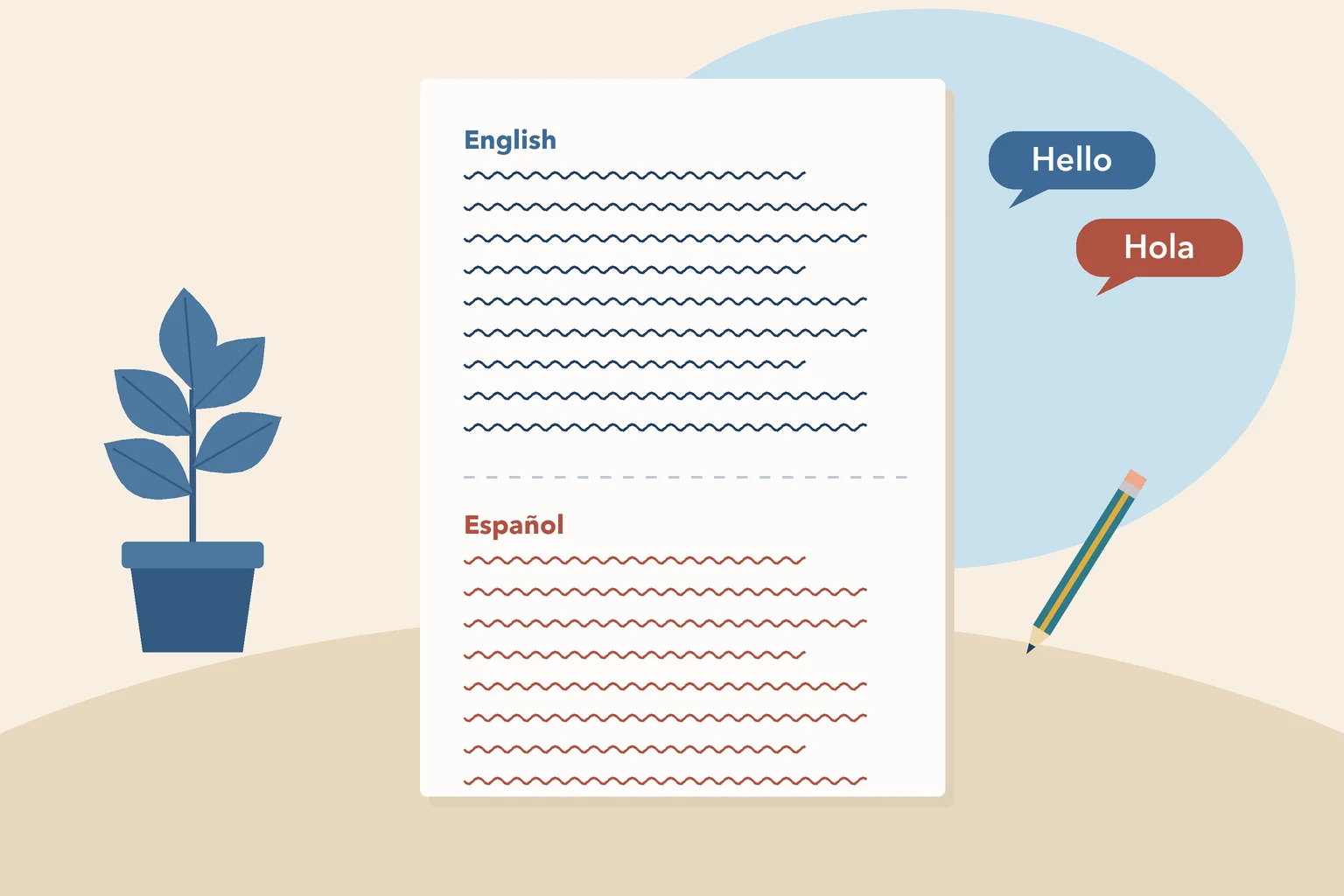
The half-and-half letter: each of you writes part of every letter in each language
The most common reason language exchanges fail is that they quietly become one-sided. One person's language is "easier", or one person is more confident, and after a few letters everything is happening in just one language. The half-and-half letter stops that from happening.
How it works
- Split every letter in two. Write the first half in your pen pal's language (the one you are learning) and the second half in your own. Your pen pal does the same in reverse.
- Keep the halves roughly equal. Nobody is counting words, but if one half is always three lines and the other is always three pages, talk about it.
- Use the "easy" half for the hard things. Save complicated stories, jokes and emotional news for the half you write in your own language. Use the learning half for everyday topics you can manage.
- Add a questions corner. End with two or three questions: "How would you say this?", "Is this word old-fashioned?", "What do people your age call this?" These questions become the most useful part of every reply.
A gentler version for beginners
If you are at the very start, write your whole letter in your own language and add just one short paragraph in the language you are learning. Even three sentences count. Grow that paragraph a little with every letter, and within a few months you will find you are writing half the letter without noticing.
Correcting Each Other Kindly
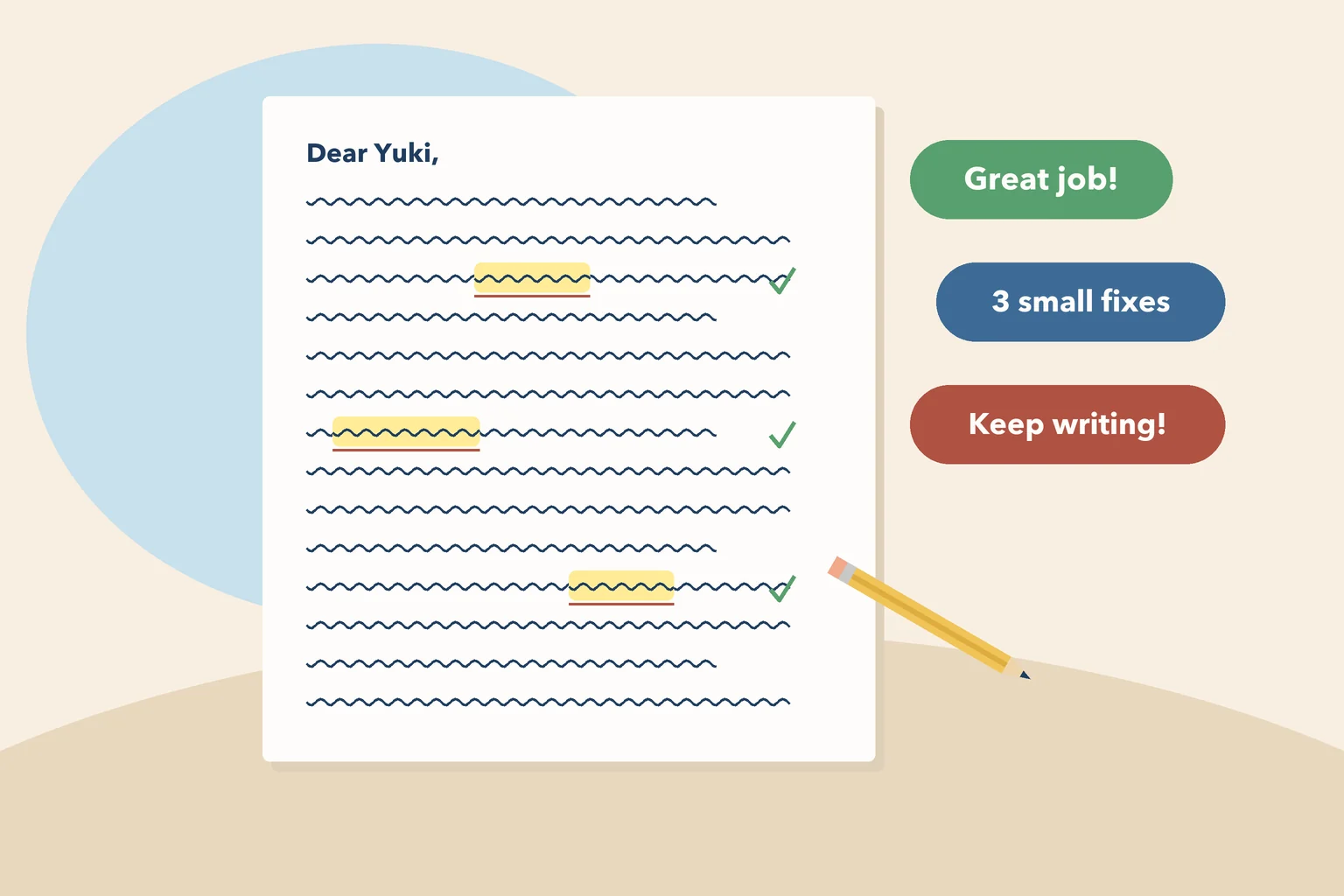
Three small fixes, wrapped in encouragement, teach more than a page of red ink
Corrections are where language exchanges either flourish or die. Too many and your pen pal feels graded rather than befriended. Too few and neither of you improves. The sweet spot is small, specific and kind.
The rules that keep it friendly
- Ask first: in your opening letter, ask how much correction your pen pal wants. Some people want every mistake marked. Others want only the ones that change the meaning.
- Three corrections per letter, at most: pick the mistakes that matter (a wrong verb tense you keep using) over the ones that do not (a missing accent).
- Sandwich them: something you loved about the letter, then the corrections, then encouragement. It sounds obvious, and it works every time.
- Explain, do not just fix: "We say on Monday, not in Monday, because days take on" teaches a pattern. A silent correction teaches one word.
- Praise what they got right: "You used the past tense perfectly all the way through" is information too, and it is the kind that keeps people writing.
- Never correct the tone: a pen pal who writes "I am very exciting to hear from you" has made a small mistake and a lovely gesture. Fix the word, keep the warmth.
⚠️ Do not turn into a teacher
If every letter you send is mostly corrections, you have stopped being a pen pal. The friendship is what makes the practice stick. Keep the corrections in a short section at the end and let the rest of the letter be a letter.
What to Write About
Everything you would write to any pen pal works here, and our list of letter topics is a good place to start. Some subjects are especially useful for language learners because they give you vocabulary you will really use:
- Your daily routine: the most useful vocabulary in any language, and easy to write at any level
- Food and recipes: ingredients, measurements and instructions, plus something to cook at the weekend
- Festivals and holidays: what your pen pal's country celebrates, and the words that go with it
- Idioms and sayings: swap one idiom per letter and explain where it comes from
- Word of the week: each of you teaches one word or phrase you think the other should know
- Songs, films and books: recommend something in your language and ask what they made of it
- Mistakes you have made: the funny ones. Every learner has a story about ordering the wrong thing.
Tools That Help (Without Doing the Work for You)
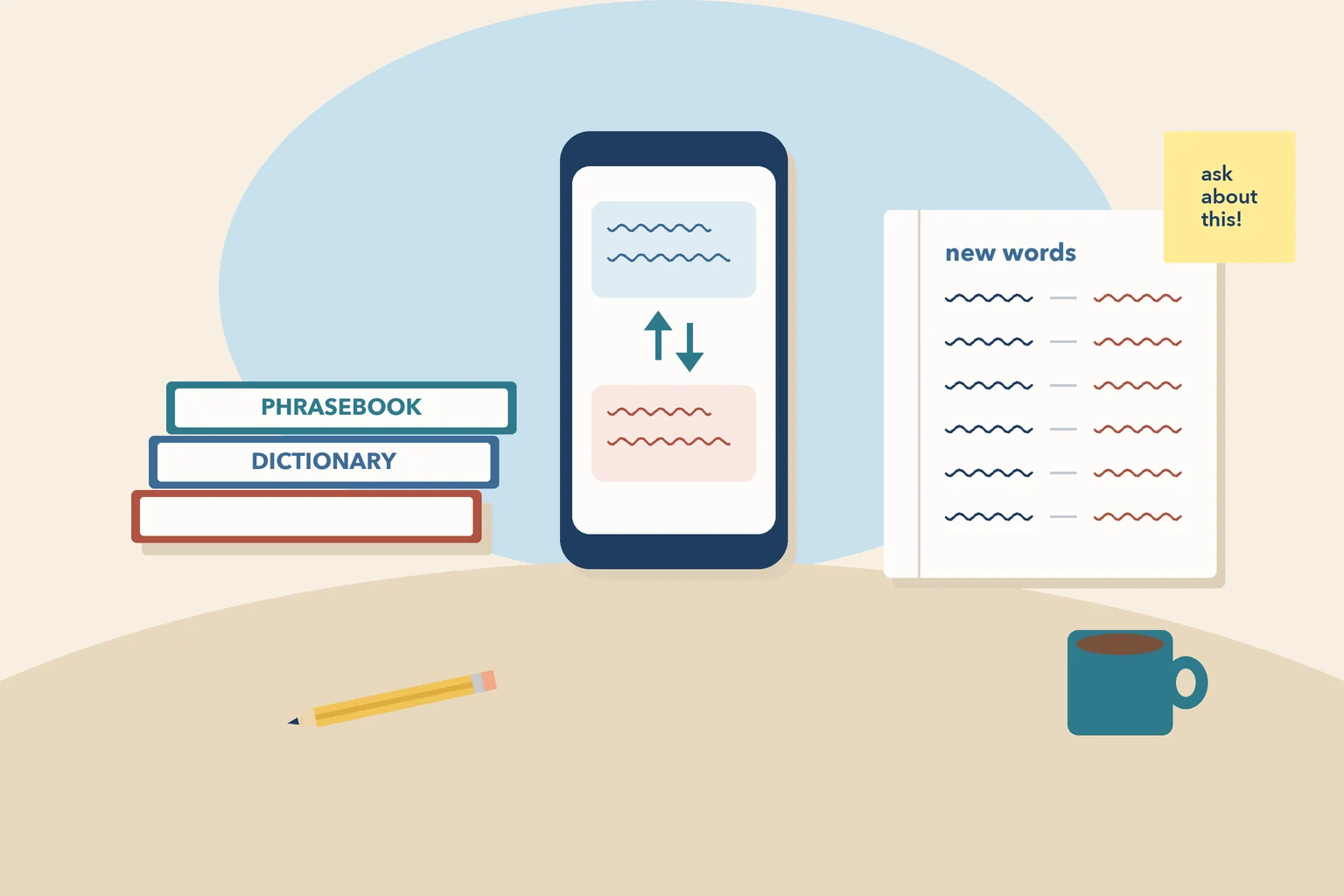
Use tools to check your writing, not to write it for you
- A good dictionary: online or on paper. Look up words as you read your pen pal's letter, and keep a list.
- A vocabulary notebook: two columns, their language and yours. Reread it before you write each reply and try to use three words from it.
- Translation apps as a checker: write your sentence first, then check it. Translating the whole letter and pasting it in teaches you nothing, and your pen pal can always tell.
- A "questions" sticky note: jot down anything you did not understand while reading, then ask about it in your questions corner.
- The letters themselves: your own earlier letters are the best measure of progress. Reread one from three months ago and see how far you have come.
⚠️ The machine translation trap
It is tempting to write your letter in your own language and run it through a translator. The result reads oddly, contains mistakes you cannot see, and gives your pen pal nothing to help with. Write badly in your own words instead. Badly is how everyone starts, and it is the only way to get better.
Keeping Up Momentum: What to Expect
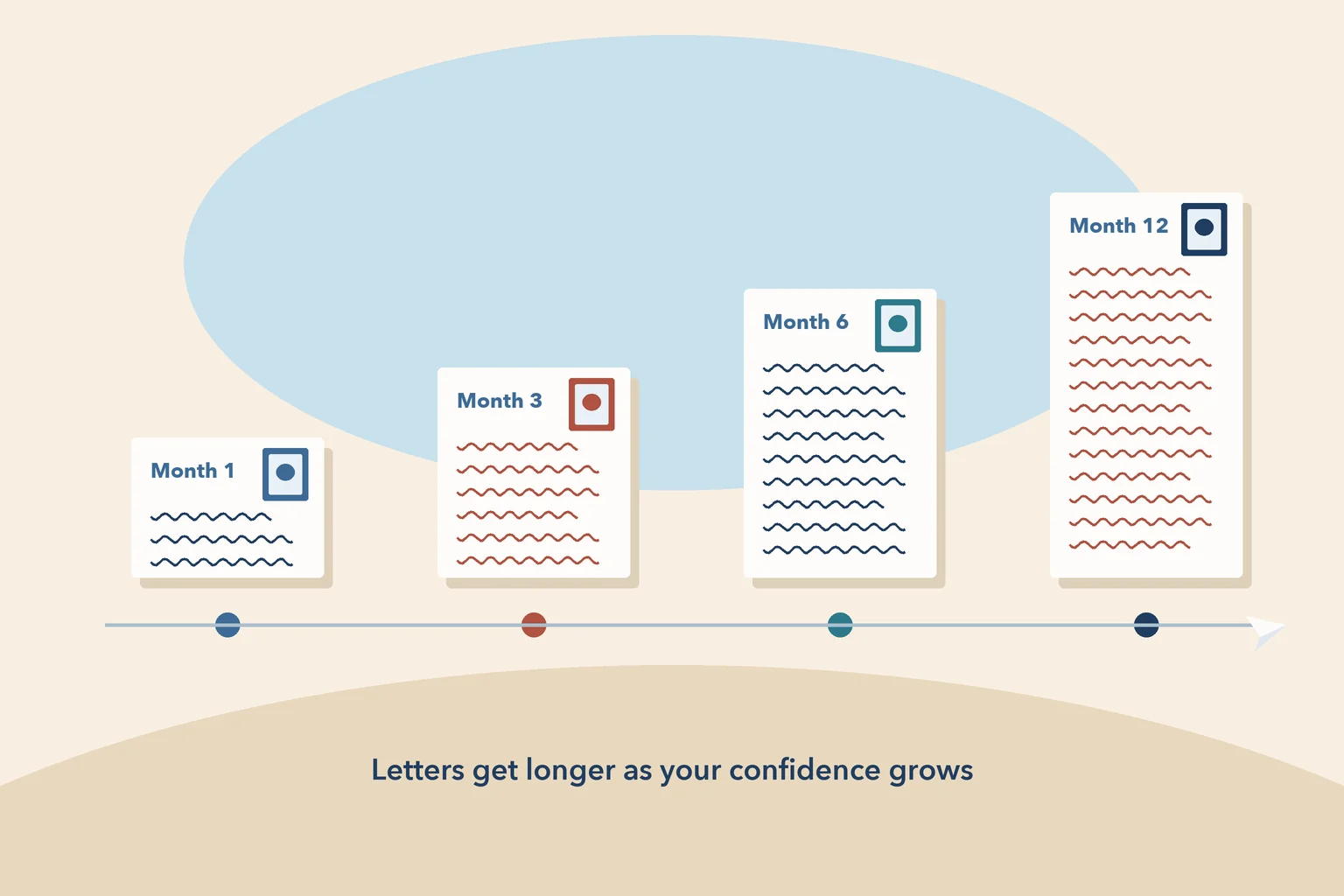
Progress is slow at first and then surprising. The letters tell the story.
A realistic timeline
- Month 1: short letters, lots of dictionary use, a few confident sentences. You will feel slow. Everyone does.
- Month 3: you recognise your pen pal's favourite phrases and have started using them. Corrections are fewer and more specific.
- Month 6: whole paragraphs come out without stopping. You are writing about feelings and opinions, not just facts.
- Month 12: you have a friend, a year of letters you can reread, and a language you can actually use. Many members celebrate this point by sending a letter written entirely in the language they are learning.
Keeping the exchange alive
- Agree a rhythm: once a week or once a fortnight. Regular beats frequent.
- Reply even when you are busy: a short letter keeps the thread alive. Silence is what ends exchanges.
- Have more than one partner: two or three language pen pals means a slow reply from one never stalls your practice.
- Mix in some fun: a postcard, a photo of your town, a recipe. Our guide to long-lasting friendships has more ideas.
Staying Safe While You Learn
⚠️ Keep the conversation on Global Penfriends
A language exchange partner sometimes suggests moving straight to a messaging app "because it is easier for practice". You do not need to. Everything you need for a written exchange works right here, and keeping your conversation on the site keeps your phone number, email and social accounts private until you have got to know each other properly. Our trust system holds back contact details in new conversations for exactly this reason, and members under 18 should keep chats on the site and involve a parent.
- A pen pal who wants to practise will happily write here: anyone who insists on moving off the site in their first letter is not looking for a language exchange
- Correct the language, not the person: and expect the same courtesy back. Anyone who mocks your mistakes is not a partner worth keeping.
- Postal exchange comes later: if you want to swap handwritten letters, wait until you have been writing for a while, then follow our safety tips for sharing addresses
- Read the basics first: our guide to finding safe pen pals online covers the red flags every new member should know
Frequently Asked Questions
Do I need to be good at the language before I start?
No. You need to be able to write a few sentences and be willing to make mistakes. Start with a letter mostly in your own language and one short paragraph in the language you are learning, then grow it letter by letter.
What if my pen pal's English is much better than my Spanish?
That is normal, and it is why the half-and-half structure matters. Keep writing your half in Spanish however simple it is. Your pen pal gets practice reading and correcting, and you get the practice you came for.
How often should we write?
Once a week is ideal for online exchanges, once a fortnight for post. Agree the rhythm in your first letters so that neither of you is left wondering.
Can I have more than one language exchange pen pal?
Yes, and it is a good idea. Two or three partners keep your practice steady, and different people teach you different things: one might be great at explaining grammar, another might send wonderful slang.
Is a language exchange pen pal free?
Yes. Global Penfriends is free to join, and both people in an exchange are giving as much as they get. Premium membership adds extras such as a larger mailbox and advanced search, but a language exchange itself never costs anything.
Your First Letter Is the Hardest. Write It Anyway.
Every fluent speaker was once a beginner writing three nervous sentences to a stranger. A language exchange pen pal turns those sentences into a conversation, the conversation into a friendship, and the friendship into a language you can finally call your own.
Find a language exchange penpal today — free to join, 1 million+ members, 195+ countries, and someone out there who is learning your language right now.