


Easter celebrations
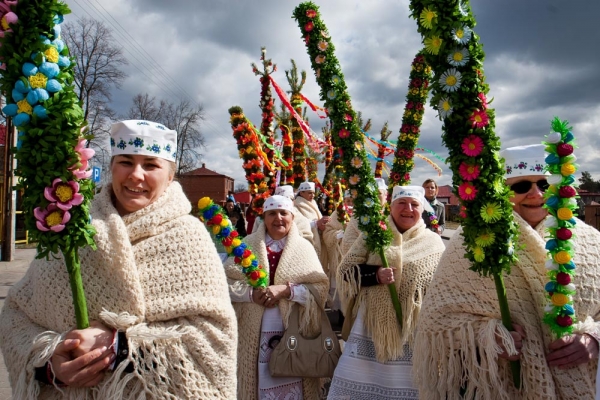
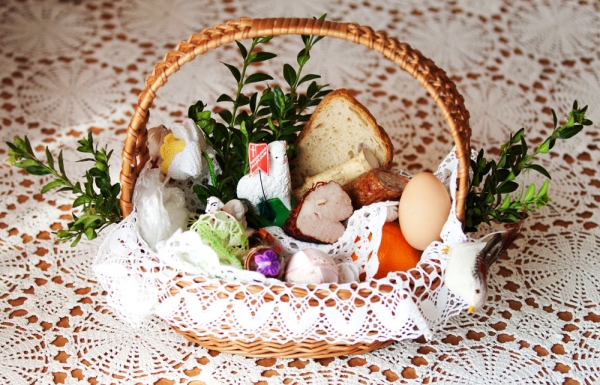
Easter in Poland is celebrated according to the Western Roman Catholic calendar. Easter Sunday falls on the first Sunday after the first full moon of spring. Rites and practices are therefore marked by Christianity, but still remain strongly influenced by pagan traditions. It is usual for both modern and conservative families to partake in the celebrations, regardless of what their religious beliefs may be. On the Saturday before Easter Sunday, Poles paint hard-boiled eggs (called pisanki). Some use store-brought kits which make the colouring and decorating easier, others continue to make dyes the traditional way – with boiled onion skins. Another Saturday activity is the preparation of Easter baskets. Lined with a white linen or lace napkin and decorated with sprigs of boxwood (bukszpan), the baskets contain a sampling of Easter foods: pisanki, a piece of sausage or ham, salt and pepper, bread, a piece of cake and an Easter Lamb made of sugar or even plastic. They are brought to church to be blessed. On the most important day, Easter Sunday, some go to church at 6am for the Resurrection mass – a ceremonial service and procession. Homes come alive with families who gather to eat breakfast. Before the meal, in much the same way as for Christmas with the sharing of the opłatek (Christmas wafer), people share wedges of the blessed Easter eggs from the basket. They exchange wishes and a Wesołego Alleluja (Joyful Hallelujah). The breakfast is dominated by cold dishes and is a feast for meat lovers: ham, sausage, roast meats,pâté (pasztet), eggs, horseradish relish, bread. Easter breakfast is so decadent that it has to be considered a day-off from the Spring diet. What follows is a frenzy of Easter cakes: a tall, round 15-yolk sweet yeast cake with a hole in the middle (babka) that can be compared to the American election cake; mazurek, a cake with a fat layer of icing, decorated with dried fruit, walnuts, almonds, roasted seeds; or sernik, a classic Polish cheesecake. The last festive day is Easter Monday, known as Śmigus-Dyngus (Wet Monday), on which tradition requires that boys throw water over girls and spank them with willow branches.
|