


Transhumance festival
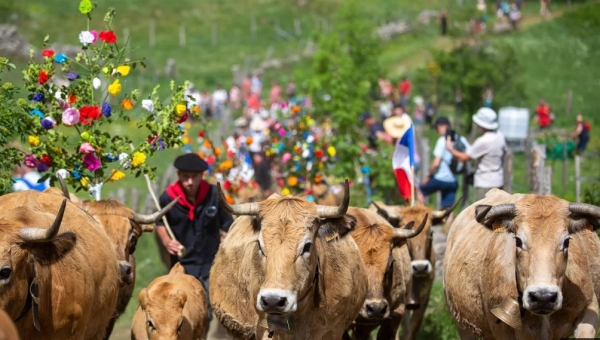
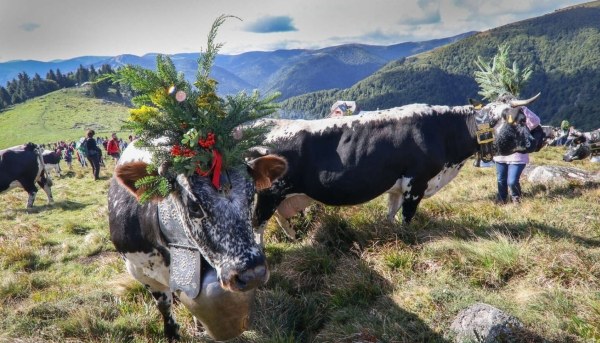
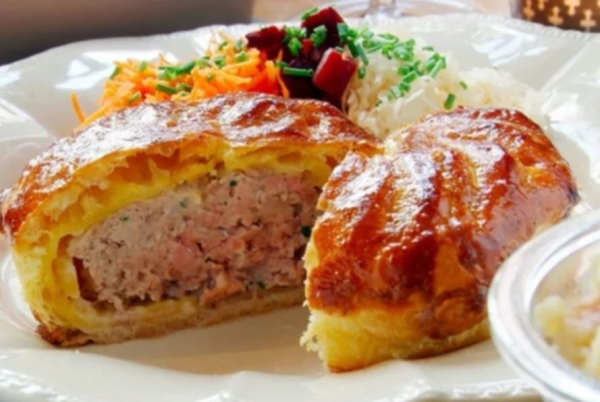
Where I live, in the Grand Est region (between the Vosges mountains and Alsace), we have a non-religious tradition that celebrates the change of seasons and our connection to nature: The Transhumance Festival (known locally as La Fête de la Transhumance).Every spring (around May) and autumn (around October), our local mountain farmers move their herds of cattle. In the spring, the cows climb up to the high altitude stubble fields (les chaumes) to eat fresh grass all summer. In autumn, they come back down to the valley farms to be protected from the harsh winter snow.What makes it a true folklore keepsake is how the community turns this agricultural necessity into a massive, joyful street parade: The Queen Cows: —called les meneuses (leading cows)—are beautifully decorated with large flower crowns, pine branches, and ribbons handmade by the villagers. The cows wear giant, heavy traditional bells around their necks. When hundreds of them walk through the mountain villages, the ringing sound is absolutely mesmerizing and echo through the valleys.The local farmers (traditionally called les marcaires) dress up in their traditional regional outfits. They walk alongside the herds, followed by musicians playing folk music and folk dancers. After the parade, everyone gathers to share a traditional mountain meal called a repas marcaire, which includes a local meat pie, potatoes cooked in butter for hours, and our famous Munster cheese. This event represents the spirit of this region: a deep respect for nature's cycles and pride in our local terroir. It is a time when the whole valley comes alive, celebrating the rhythm of the earth.
|