


Dust Bowl Days
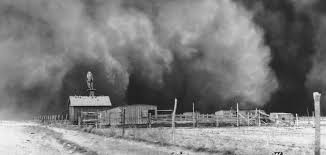
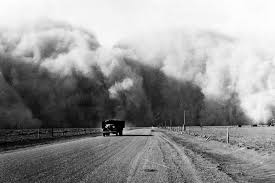
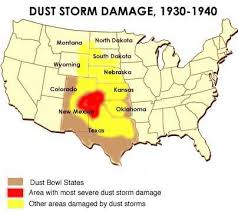
In 1935 during the depths of the Great Depression, whole sections of the American Midwest suffered through a terrible drought that produced monstrous dust storms. They sucked up what little topsoil existed on prairie farms and blew away the livelihood of thousands of small farmers with it. This was later to be titled the great Dust Bowl. More than one million people — facing the unrelenting drought, dust and wind that descended upon the American heartland — were forced to abandon their homes and seek survival elsewhere. In battered trucks and jalopies, they carried everything they owned toward what they imagined was a land of milk and honey in California. Some of these workers migrated to the “Lamont Farm Supply Labor Center,” one of 17 refugee settlement camps set up under President Franklin Roosevelt’s “New Deal.” It was this same camp in the desert of California, that Steinbeck described. Steinbeck called it the “Weedpatch Camp” in his book, and that’s the name that stuck. It was at the Weedpatch Camp where John Steinbeck was researching when he was inspired to write his Pulitzer Prize winning novel, The Grapes of Wrath. Much of the novel is based on the Weedpatch Camp and the records kept by Tom Collins, the manager. The Camp was also featured in the film version of the novel, directed by John Ford and starring Henry Fonda, which was nominated for seven Academy Awards including Best Picture.
|